
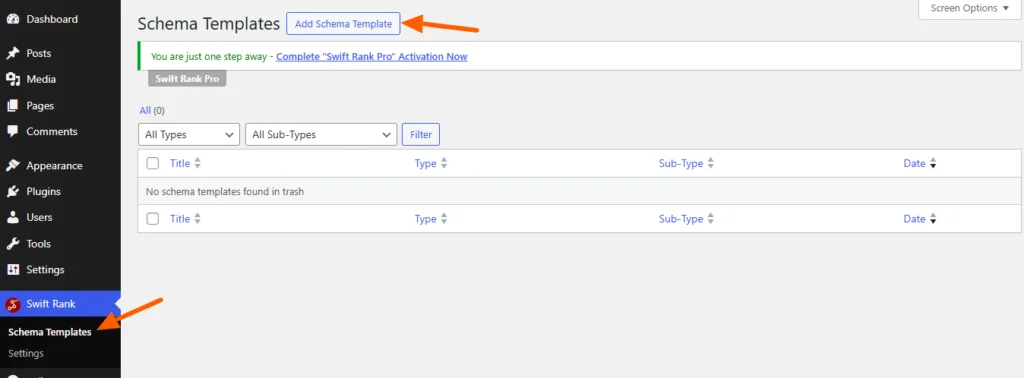
To add organization schema using Swift Rank, first ensure that the Swift Rank plugin is properly installed and activated on your WordPress website. Once the plugin is active, navigate to Schema Templates from the Swift Rank dashboard to begin creating organization schema template.
Click on Add Schema Template to start.
Name Your Schema Template #
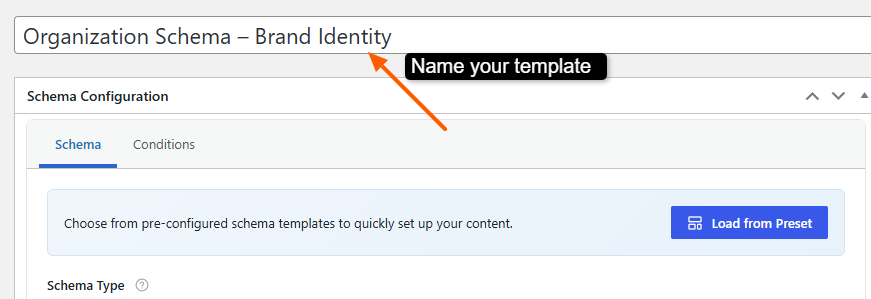
You can enter a clear and descriptive title for your template.
- Organization Schema – Corporate Information
- Organization Schema – Sitewide Organization
- Organization Schema – Company Profile
- Organization Schema – Brand Identity
- Organization Schema – Global Organization
This helps you easily identify the template later, especially when managing multiple schemas.
Select the Schema Type #
In the Schema Configuration panel located in the right sidebar, find the Schema Type dropdown. Click the dropdown and select organization from the available schemas.
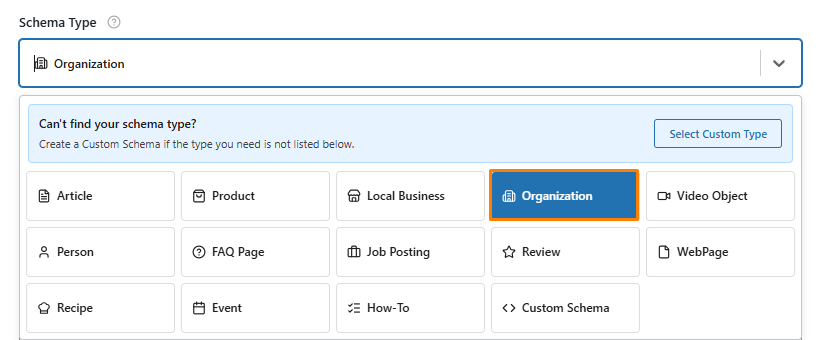
Once the organization schema type is selected, Swift Rank will automatically load all predefined fields required to describe organization content accurately.
Configure Organization Schema Fields #
Site Name #
To enter the site name, click the pencil (edit) icon next to the field to manually add a custom business name. This option is useful if you want to display a name that differs slightly from your website title or if your business operates under a specific registered name.
Alternatively, click the <> (Insert Variable) icon and select the {site_name} variable from the list.
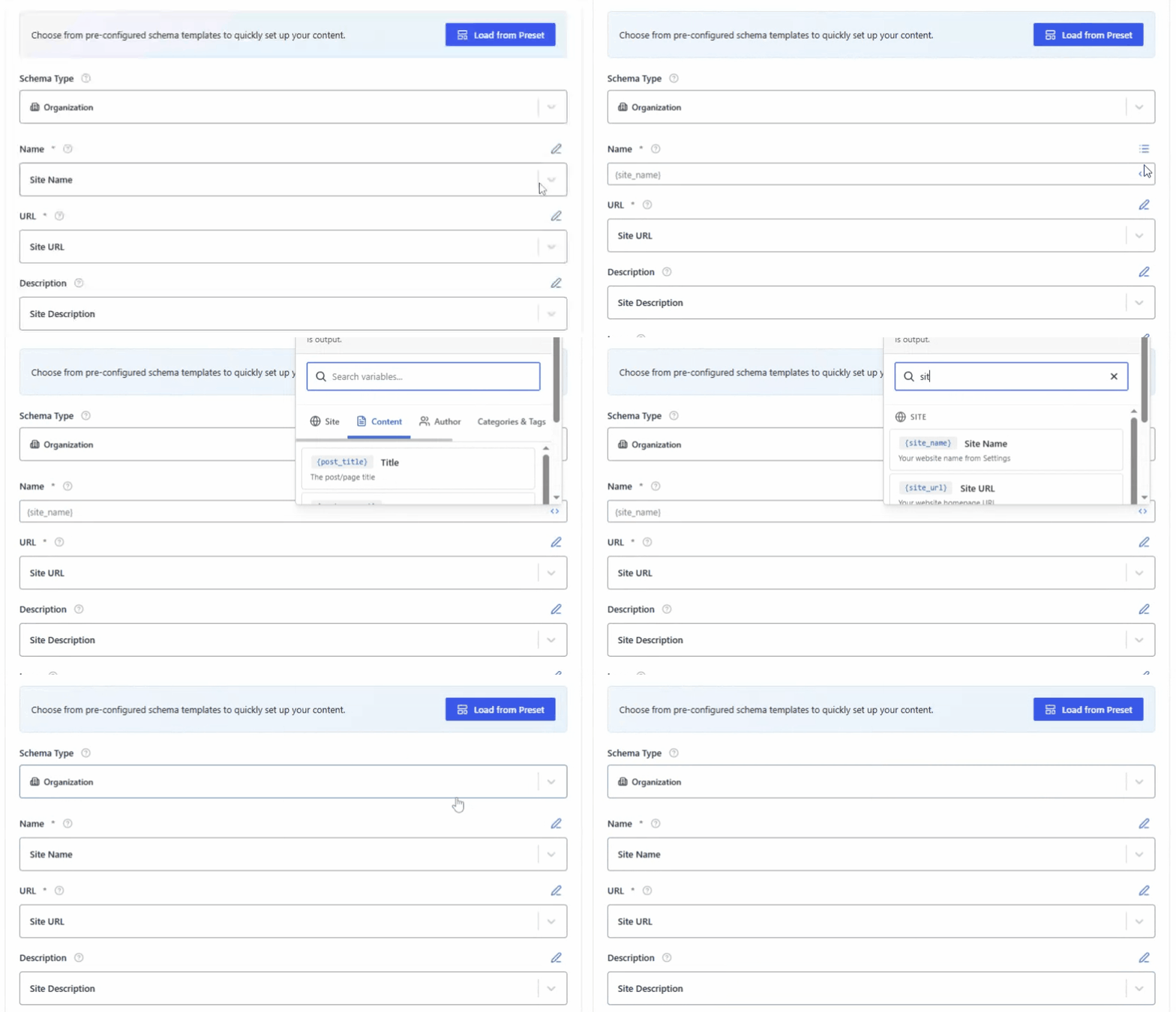
This option automatically pulls the website name from your WordPress settings and applies it to the schema. Using a dynamic variable ensures consistency across all schema templates and automatically updates the site name if it is changed in the site settings.
Site URL #
To add the site URL, click the pencil (edit) icon next to the field. You can manually enter a custom URL if required. Alternatively, click the <> (Insert Variable) icon and select the {site_url} variable from the list.
Using this variable automatically pulls the main website URL from your WordPress settings, ensuring consistency across all schema implementations.
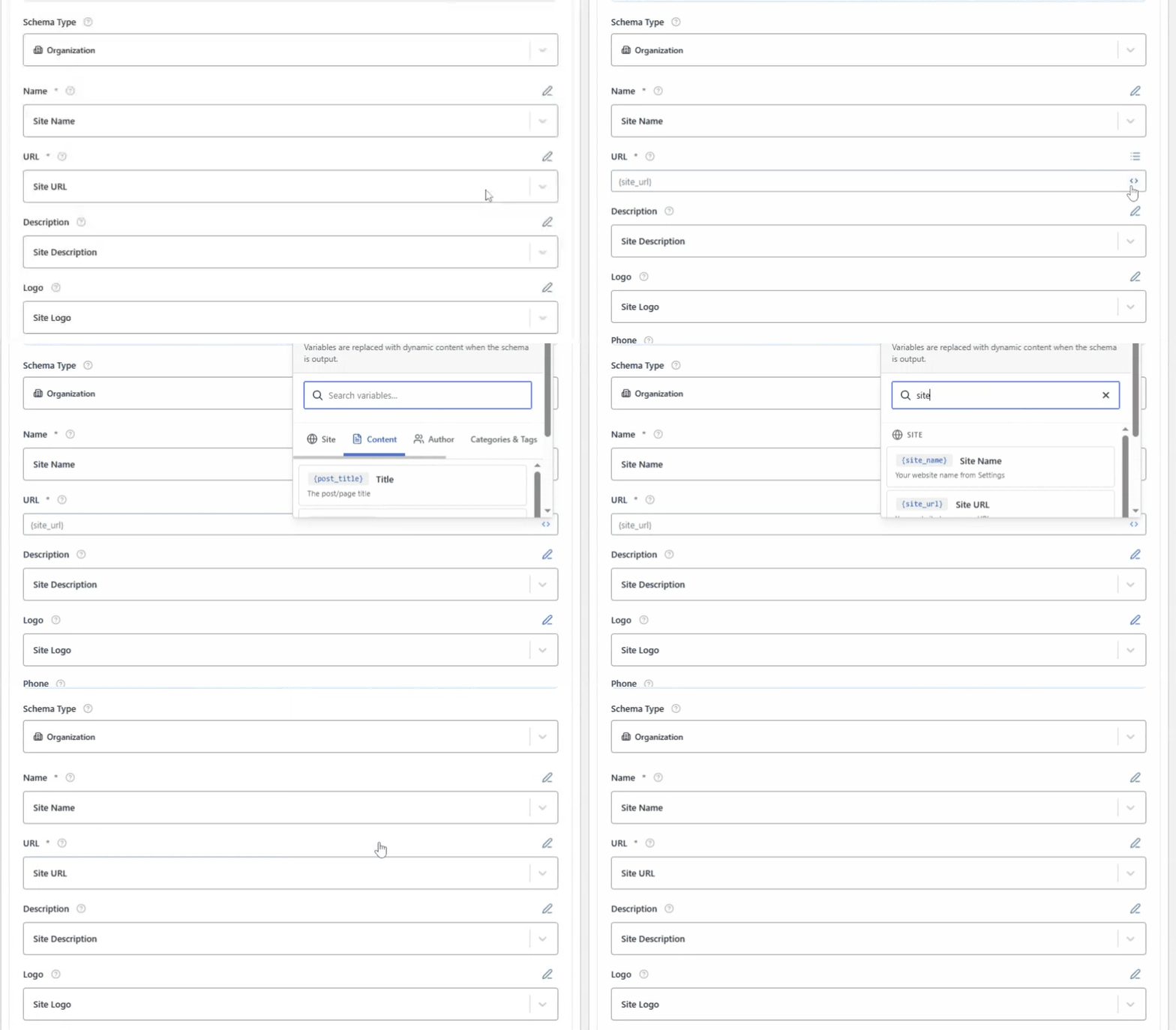
The site URL field defines the primary website address of the business. This information helps search engines correctly associate the Local Business schema with your official website and improves brand recognition in search results.
Site Description #
To add a description, click the pencil (edit) icon to enter a custom business description manually. The description should be informative, accurate, and aligned with the content displayed on your website.
You may also click the <> (Insert Variable) icon to insert a dynamic variable {site_description}, allowing Swift Rank to automatically populate the description based on your site or content settings. Dynamic variables help maintain consistency and reduce the need for manual updates.
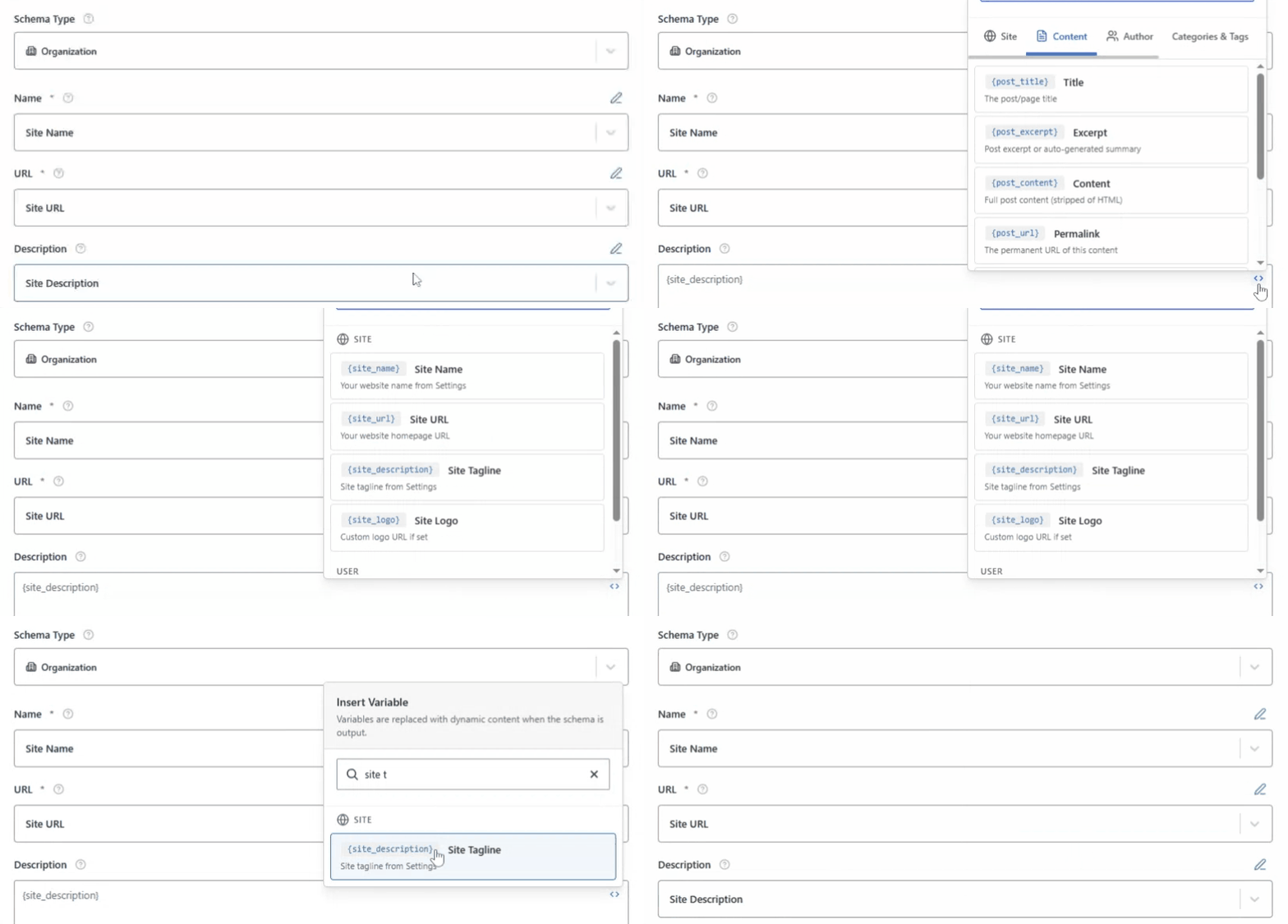
The Description field provides a clear and concise overview of your business, including the services you offer and your primary area of focus. This description helps search engines better understand your business and improves the relevance of your local search appearance.
Site Logo #
To add an image, click the pencil (edit) icon and enter a direct image URL, or use the <> (Insert Variable) icon to dynamically insert an image from your site. For this, you can select the {site_logo}. You can upload the image by clicking on the image icon in field.
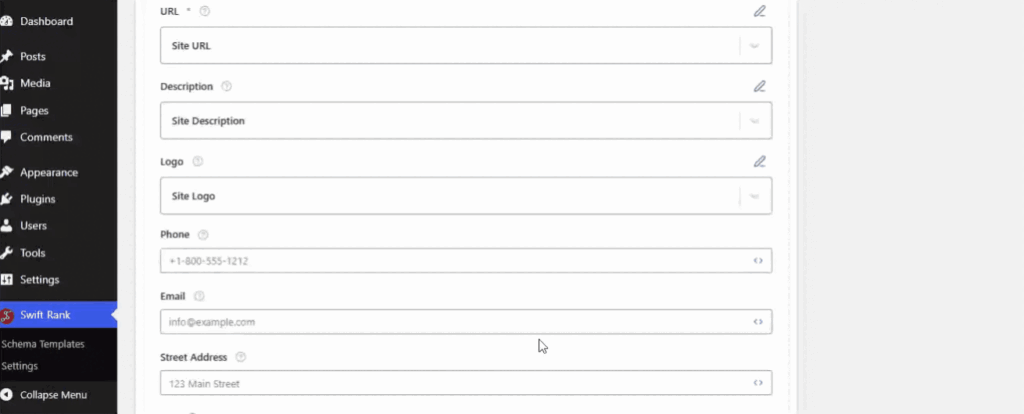
The site logo field defines the primary image associated with your business. This image may appear in rich results and helps search engines visually represent your business.
Phone #
Click the <> variable insert option to enter a phone number from dynamic variables or enter phone number manually, including the country code if applicable. Ensure the number matches the one displayed on your website and other business listings for consistency.

The Phone Number field specifies the primary contact number for your business. This helps users and search engines easily connect with your organization.
Email #
The Email field defines an official contact email address for your business. This information supports trust and accessibility.

You can enter a valid business email address. It is recommended to use a professional email associated with your domain rather than a personal email address.
Street Address #
Enter the full street address, including building number and street name.

The Street Address field contains the physical street address of your business location. This is a critical component of Local Business schema and helps search engines accurately determine your business location.
City #
Eenter the city name exactly as it is commonly recognized.

The City field specifies the city where your business is located. Accurate city information improves local search relevance and map visibility.
State/Region #
Enter the appropriate state or region name to help search engines accurately classify your location.

The State / Region field defines the state, province, or administrative region of your business location.
Postal Code #
The Postal Code field represents the ZIP or postal code of your business address. This information helps refine geographic accuracy.

You can put a static value or can use the dynamic variable.
Country #
Enter your country name in the field. You can also add static name here. Ensure consistency with your website and other business profiles.

The Country field specifies the country where your business operates. This is important for international and local search accuracy.
Social Media Profiles #
Social media profiles connect your business to its official social platforms, such as Facebook, Instagram, Twitter, or LinkedIn.
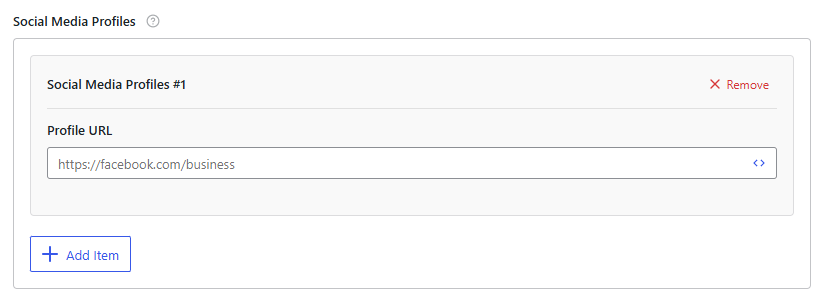
Adding these links strengthens brand authority and helps search engines associate your business with its online presence. These schema fields can also be modified directly while editing an individual post or page.
Once all these fields are done click on the publish button.


